Custom Software for Export Operations in Izmir

We build software for export and logistics operations in Izmir. What the briefs here share is a common shape: the information already exists, but nobody can see on one screen where the goods, the paperwork and the samples currently are.

  • Scope in writing

    What will be built, when it ships and what is out of scope — agreed before production starts.

  • You stay in control

    Every project ships with an admin panel so you can update content yourself.

  • Support after launch

    Small fixes are covered by the support scope of the package you choose.

Shipment and paperwork: one order, two separate journeys

An export order travels twice. Physically the goods are produced, palletised, warehoused, loaded into a container and moved to the port. On paper there is an invoice, a packing list, a certificate of origin, an analysis report and a bill of lading.

Trouble almost always comes from those two journeys being tracked in different places. The load is ready but a document is missing, or the document is ready but the shipment slipped and nobody put the two side by side. The result is a missed vessel or demurrage at the port.

In the systems we build the order is one record, and both journeys live on the same card: production status, pallet and container detail, dispatch date and the state of every required document. A missing document is visible from the moment the order opens rather than on the day of shipment.

Document preparation can be automated too. Typing the same information into five separate forms wastes time and creates errors; held once, the data can generate the documents.
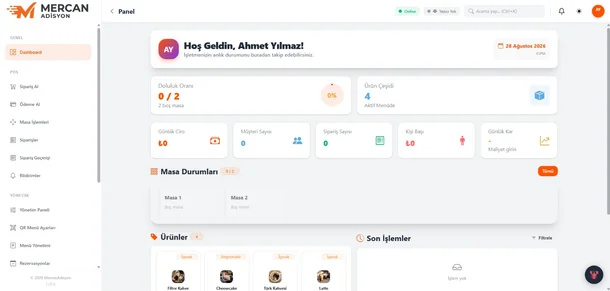
Management panel tracking shipment and documentation status
One record per order: production status, container detail and document state on the same card.

Batch traceability and audit readiness in food

In food and agricultural export, traceability is not merely good practice; most buyers require it. Which harvest or which supplier a batch came from, which analyses it passed and which customer received it all have to be on record.

Kept in spreadsheets, that record fails on audit day. The data exists but is scattered, assembling it takes hours, and what the auditor sees is a company that was not ready.

In the structure we build, a batch number opens at goods-in and stays with the product. Analysis results, production date, packaging detail and dispatch records attach to that number, so a customer query is answered in minutes.

Sample management is another frequent request. In export, sampling is a real part of selling: which sample went to which buyer, when, by which courier, and whether feedback came back. Untracked, the same sample gets produced twice and then forgotten before anyone follows up.

Visibility in logistics and warehousing

In freight forwarding, customs clearance and warehousing, the largest source of customer frustration is not delay but not knowing about the delay. Customers can absorb a late shipment; they cannot absorb not knowing where it is.

So the first function of the systems we build for these companies is usually a visibility layer opened to the customer: which stage the load is at, the expected timing and the related documents. That alone reduces inbound phone calls noticeably.

In the warehouse the questions are location and counting. When which product sits on which rack, and when stock was last counted, are not held in a system, the pallet someone is looking for exists physically but cannot be found.

The critical design decision in this kind of system is that data can be entered where the work happens. If a warehouse worker has to walk to a desk and fill in a form, the data never arrives; it has to be enterable in a few taps on a handheld or a phone.

How a project runs, and when it is not needed

The first step is seeing the process in place. Where information is held and where errors actually appear cannot be learned at a desk, and in export operations that is doubly true, because written procedure and daily practice almost always differ.

Then the scope goes in writing. The largest risk in software work is scope growing quietly during production, so changes are quoted separately and never started without approval.

Delivery happens in pieces. The most critical module goes live first and gets used, and the rest follows feedback.

Sometimes our answer is that custom software is not needed. If your process is standard, an off-the-shelf package solves it faster and for less. The distinguishing question is simple: does fitting that package require breaking the way you work?

Our work in Izmir

Working with exporting producers and logistics firms in and around Izmir, the requests we meet most often are shipment and document tracking, batch traceability, sample management and customer-facing visibility screens. Where we have built something comparable before, we say so.

Pricing and packages

from121,400TL

Custom Software Solutions packages start here. Scope, timeline and the final quote are set after we talk about your project.

Frequently asked questions

The questions we hear most about Custom Software Solutions in Izmir.

Can we keep our existing accounting or ERP package?

Usually yes. We do not push companies to replace something that works; we connect the new system to it. On the first call we check whether the package allows data exchange, and if it does not, you need to know before the project starts because it changes the scope.

Can our customers track their own shipments?

Yes, and in logistics it is one of the highest-value features. A visibility screen opened to customers reduces inbound calls noticeably. We agree together which information is shown, since not every field needs to be shared.

Connectivity in the warehouse is poor. Will it still work?

Connection problems are common in warehouse and yard conditions, so we design for them from the start. We prefer a structure that runs locally and synchronises when the connection returns. An outage should not stop a count or a dispatch.

Can the system generate documents automatically?

Once the data is held in one place, yes. Typing the same information into several forms wastes time and creates errors. We review which documents can be driven from templates on the first call, and where an official or corporate format is required, someone on your side needs to confirm that the format is correct.

Who owns the software?

Scope and licence terms are written into the contract: who owns the business logic built specifically for you, whether source code is handed over, and what maintenance covers. We settle those clauses at the start.

Looking for Custom Software Solutions in Izmir?

Tell us where your operation gets stuck most often and we will say whether it can be solved, whether a standard package would do the job, and roughly what the scope looks like.