Web Design in Bursa

We design and build websites for companies in Bursa. The first decision is not visual. It is deciding who the visitor is: a sourcing engineer running an elimination, a dealer looking for a price list, or an end customer browsing a collection. Each of those needs a different page underneath.

  • Scope in writing

    What will be built, when it ships and what is out of scope — agreed before production starts.

  • You stay in control

    Every project ships with an admin panel so you can update content yourself.

  • Support after launch

    Small fixes are covered by the support scope of the package you choose.

For an automotive supplier, the site is a pre-qualification file

Someone arriving at the website of a second or third tier supplier is not browsing. They are shortening a list of candidates, and the criteria are predictable: which processes you run in house, what machinery you own, the tolerances you hold, how measurement and quality control are organised, and whether you have made anything comparable before.

Most supplier sites hide all of this behind a sentence about being a leader in quality. Buyers are not looking for claims, they are looking for figures. A machinery list in a table, capacity written as a number and certificates left downloadable turn a brochure page into something a buyer can actually use.

Reaching the right person matters just as much. A corporate buyer will not fill in a general contact form; they want the name, role and direct line of whoever can quote. Publishing that visibly shortens response time more than any redesign does.
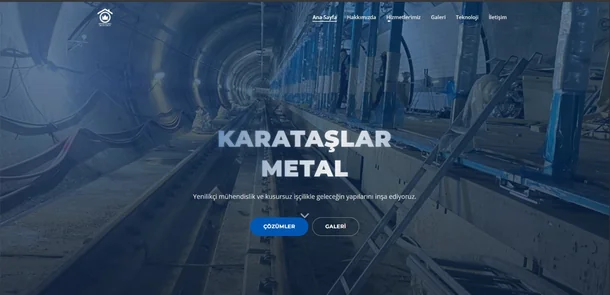
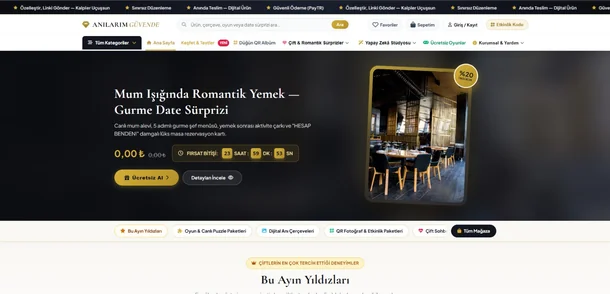
Home page of a corporate website built for an industrial engineering company
Industrial layouts lead with capability rather than slogans: process list, machinery and certification above the fold.

In İnegöl furniture, the decision is made from a photograph

Furniture buyers do not read technical documents, they look at collections. The most expensive mistake on these sites is therefore photography: a well-made suite shot on a phone in a dark warehouse reads as a cheap product, and the buyer moves on to the next supplier.

The structure differs too. These sites are organised around collections rather than individual items, with dimension tables, fabric and finish options, packing sizes and the number of sets per container. Export buyers ask for that last figure almost before they ask the price.

Companies with a dealer network need a second layer: a public collection window plus a password-protected area where dealers find price lists, high-resolution imagery and assembly instructions. That single change removes a surprising volume of email from the sales team's day.

Trade fairs set the schedule. When a site has to be ready for a fair, we plan backwards from that date and mark in advance when each piece of content has to exist.

Product listing screen of an online store with variant selection
A collection-led layout keeps dimensions, fabrics and finish options on the same screen as the image.

Textiles: two opposite websites on the same street

A workshop producing under another company's label and a manufacturer selling its own brand need almost opposite websites. In contract manufacturing the visitor is a brand's sourcing team, and they want capacity, daily output, machinery, minimum order quantity, sampling lead time and whether you are ready for a social compliance audit.

A manufacturer selling its own label faces the end customer, where size charts, fabric composition, returns policy and delivery time carry the page, and capacity figures interest nobody.

This matters because textile firms in Bursa frequently do both at once, and trying to tell both stories on one site blurs both. Depending on how revenue splits, we either separate them into two clearly divided sections or recommend two sites.

Seasonality also shapes the build. Every collection change means replacing the imagery, so the admin panel is set up for you to do that without booking agency time.

Handover, panel and what follows

The work runs in four stages: agreeing direction, putting scope and timeline in writing, production with visible checkpoints, then testing and launch. Each stage produces a document, so nobody sees the site for the first time on delivery day.

Every site ships with an admin panel. Adding a product, swapping a collection or replacing a certificate should not require an agency appointment, and we walk through the panel with you at handover.

For exporters an English version is effectively mandatory, and running Turkish copy through machine translation does not qualify. Industry vocabulary is exactly where automatic translation fails, and a buyer who notices quietly concludes you are new to selling abroad. You can supply the translation or commission it from us as a separate line.

Domain and hosting sit outside the packages and we recommend registering both in your own company name. They are your assets and they should stay with you. Payment normally runs half up front and half on delivery, by bank transfer or through payTR.

Our work in Bursa

We work with manufacturing, exporting and local service businesses in and around Bursa. Part of that work is published on our project pages, in as much technical detail as each client has agreed to. On a first call we can point you to whichever examples sit closest to your own sector.

Pricing and packages

from20,200TL

Corporate Web Solutions packages start here. Scope, timeline and the final quote are set after we talk about your project.

Frequently asked questions

The questions we hear most about Corporate Web Solutions in Bursa.

Do we need to meet in person in Bursa?

No. Most projects run entirely through online meetings, screen sharing and a written scope document, which tends to be both faster and better recorded because every decision leaves a trace. On-site sessions can be arranged for larger scopes. We do not keep a physical office in Bursa and we say so up front, since proximity genuinely matters to some companies.

Our catalogue is printed. How does it move onto the site?

Uploading the print PDF is the easiest and least useful option: search engines read it poorly and nobody wants to pinch-zoom a catalogue on a phone. We enter the products as records on the site and leave the PDF downloadable alongside. If your files are scattered, we agree first which fields are mandatory and which are optional, then plan the transfer around that.

Can we give dealers a separate area?

Yes, and it is one of the most requested features in furniture and textiles. A protected section can hold price lists, high-resolution images, assembly guides and an order form. It needs to be scoped up front, because that area carries a different permission structure from the rest of the site.

We already have a site. Does it need rebuilding?

Not necessarily. We look at what exists first. If the platform can still be updated and the content structure is sound, a refresh is often the better call. On very old platforms the cost of updating can exceed the cost of rebuilding. We will not answer that question without looking.

How long does the build take?

It depends on scope, on how ready your content is and on any integrations. Corporate brochure sites finish fastest; catalogue and bilingual projects take longer. Milestones and a delivery plan go into the proposal in writing. In practice the single biggest source of delay is copy and images arriving late.

Looking for Corporate Web Solutions in Bursa?

Send us the address of your current site and we will reply with a written note on which buyer it currently speaks to, what is missing and the likely scope of putting it right.