Custom Software and Production Tracking in Bursa

We build software around the way manufacturers in Bursa actually work. The starting question is always the same one: if fitting an off-the-shelf package means breaking your own process, that is the moment to stop and think.

  • Scope in writing

    What will be built, when it ships and what is out of scope — agreed before production starts.

  • You stay in control

    Every project ships with an admin panel so you can update content yourself.

  • Support after launch

    Small fixes are covered by the support scope of the package you choose.

Traceability is the real problem in automotive supply

For a company supplying parts upstream, the hard part is rarely production. It is documentation. When a complaint arrives, you have hours rather than days to show which material batch the part came from, which machine and shift processed it, which measurements passed it and where it shipped.

Kept in spreadsheets, that record fails twice. First on accuracy, because data is entered by hand, late, and sometimes not at all. Second on defensibility, because in an audit it is not enough to have a record; you need to show when it was created and by whom.

In the systems we build, a batch number opens at goods-in and travels with the part. Measurements, scrap reasons and dispatch records attach to that same number, so answering a customer query becomes a single search rather than an afternoon of cross-checking.

There is a commercial side too. A supplier who can demonstrate traceability moves ahead of one who cannot, both in audits and when new parts are being placed.
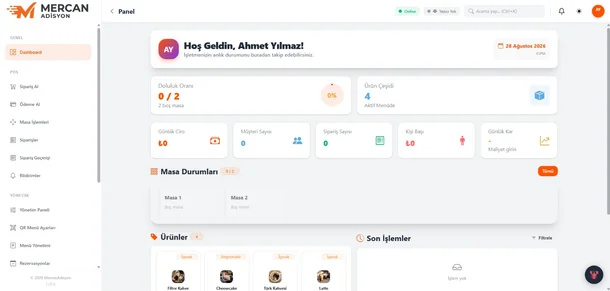
Management panel screen tracking production and order status
The batch number opens at goods-in; measurements, scrap and dispatch all attach to it.

The gap between order, cutting and sewing in apparel

In garment production information tends to disappear between three points: where the order is taken, the cutting room, and the sewing line. Once an order is broken down by size and colour, which batch sits at which stage usually lives in a supervisor's memory.

The cost surfaces on delivery day as a missing size, a wrong colour split or a fabric problem noticed too late. For a contract manufacturer that delay affects more than the order in question; it affects next season's business.

The system needed here does not have to be complicated. Holding the size and colour breakdown, the cutting ticket, the piece count on the line and the items pulled at quality control in one place is usually enough. What matters is that the data can be entered on the floor by the person doing the work, in a few taps. A form meant to be filled in at a desk never gets filled in.

Sample tracking is the other frequent request: which sample went to whom, when, and whether feedback came back. Without it, sales teams produce the same sample twice.

Furniture: variants, made-to-measure and container loading

Variant count is where standard inventory packages break down in furniture. The same suite sells in different fabrics, colours, dimensions and leg options, and opening each combination as its own product record makes the list unusable.

Made-to-measure production complicates it further, because every order is unique. The answer there is to build around the order record rather than the product record, with dimensions, chosen materials and customer-specific notes living on the order itself.

Shipping is a separate chapter. Once packing dimensions and container quantities are held in the system, planning an export load stops being a manual calculation done twice to be sure.

Dealer orders can run through the same system. Letting dealers place orders from their own screen removes most of the misunderstandings that come with orders taken over the phone.

How a project runs, and when we say you do not need one

The first step is seeing the process in place. Who writes which information where, and where errors actually appear, cannot be learned at a desk. Designing screens without walking the floor is the shortest route to a system nobody uses.

Then the scope goes in writing. The largest risk in software work is scope growing quietly during production, so changes are quoted separately and never started without your approval.

Delivery happens in pieces. The most critical module goes live first and gets used; working for months and delivering everything at once is the most expensive way to discover a misunderstanding.

Sometimes our answer is that you do not need custom software at all. If your process is standard, meaning ordinary stock movements, standard invoicing and routine account tracking, an off-the-shelf package solves it faster and for less. We say so on the first call.

Our work in Bursa

Working with manufacturers in and around Bursa, the requests we meet most often are batch traceability, order and line tracking, variant-heavy product management and shipment planning. Where we have built something comparable before, we say so; starting from an existing solution is usually both faster and cheaper than starting from nothing.

Pricing and packages

from121,400TL

Custom Software Solutions packages start here. Scope, timeline and the final quote are set after we talk about your project.

Frequently asked questions

The questions we hear most about Custom Software Solutions in Bursa.

Do we have to abandon our current accounting package?

Usually not. We do not push companies to replace something that works; we connect the new system to it. On the first call we check whether the package allows data exchange. If it does not, we tell you before the project starts, because that changes the scope directly.

If the internet drops on the shop floor, does production stop?

A production system that depends on connectivity is a real risk, so we design for it from the start. We prefer a structure that runs locally and synchronises when the connection returns. An outage should never stop the line.

Will operators actually use it?

The most common failure in this kind of project is not technical; it is a system nobody uses. We handle it two ways. Screens are designed after seeing the floor, so the most frequent action takes the fewest steps, and user training is part of going live. Releasing in stages helps as well, since nobody has to change everything at once.

Can our existing data be migrated?

If it is usable, yes. Spreadsheet data almost always needs cleaning first: the same customer spelled three ways, mandatory fields left blank, inconsistent units. We scope that cleaning up front, because migration takes longer than most people expect.

Who owns the software?

Scope and licence terms are written into the contract: who owns the business logic built specifically for you, whether source code is handed over, and what maintenance covers. We settle those clauses at the start rather than at the end.

Looking for Custom Software Solutions in Bursa?

Describe the process you are struggling with and we will tell you whether it can be solved, whether a standard package would do the job, and roughly what the scope looks like.