Custom Software and Business Applications in Ankara

We build software around the processes companies in Ankara actually run. What the briefs here have in common is rarely production. It is paperwork: keeping a trace of who approved what and when, which document expires next, and where each bid currently stands.

  • Scope in writing

    What will be built, when it ships and what is out of scope — agreed before production starts.

  • You stay in control

    Every project ships with an admin panel so you can update content yourself.

  • Support after launch

    Small fixes are covered by the support scope of the package you choose.

Bids and tenders: what gets lost is time, not information

In companies supplying public bodies and large institutions, the recurring problem is not missing information but scattered information. The tender notice sits in one person's inbox, the specification in a folder, the guarantee letter's expiry date in a calendar, the last bid in a spreadsheet. Nobody is hiding anything, and nobody can see the whole.

The cost usually appears as a missed date: a submission deadline, a certificate expiry, or the moment a missing document is noticed. One missed date can void a bid prepared over months.

In the systems we build, each tender or bid becomes a record. Publication date, submission deadline, the list of required documents, the responsible person, preparation status and outcome all live on the same card. Once expiry dates are entered, the system raises a warning before they pass.

There is also value in the history of wins and losses. Kept consistently, that record eventually shows which kinds of work you are strong in, which price bands convert, and which institutions are genuinely your customers.
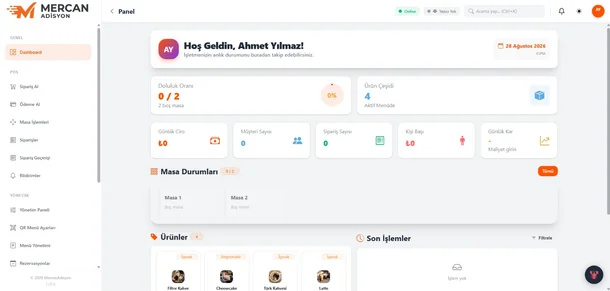
Management panel tracking bid status and document expiry
One record per bid: deadline, required documents, owner and outcome on a single card.

Permissions, records and audit trails

For companies inside corporate and defence supply chains, the most asked-about feature is not speed but visibility control. Who can open a bid file, who changed a document and in what order approvals were given all have to be recorded.

So the permission structure is built first in these projects. Roles are defined against the real working order: the person preparing, the person checking, the person approving and the person who may only view do not see the same screen. Where confidentiality requirements apply, that is a necessity rather than a convenience.

Audit trails are the second layer. Every significant change records who made it and when, and users cannot delete that record. In a dispute or an internal review, that is precisely what makes a position defensible.

Third is retention. Where data is held, how long it is kept and how it is backed up form part of the scope. You or your legal adviser define those requirements; we plan the setup around them.

At OSTİM scale: a small company with large customers

Most manufacturers along the OSTİM and İvedik corridor run small teams while their customers are large. That asymmetry produces an interesting result: the company's own internal process may be simple, while the reporting its customer expects is not.

The system's job in that situation is not to run the whole company but to clear one bottleneck, which is usually order tracking, generating dispatch documentation, or preparing the periodic report a customer expects.

At small scale the most important design decision is that the system does not depend on one person. Moving knowledge out of a single employee's head means work does not stop when that person leaves, and the cost of that risk is higher in a small firm than a large one.

Sometimes our answer is that no software is needed. If your process amounts to standard stock and account tracking, an off-the-shelf package solves it faster and for less, and we say so on the first call.

How a project runs

The first step is seeing the process in place. Who writes which information where, and who actually performs each step, cannot be learned at a desk. In corporate work that matters twice over, because the written procedure and the real practice rarely match exactly.

Then the scope goes in writing. The largest risk in software work is scope growing quietly during production, so changes are quoted separately and never started without approval.

Delivery happens in pieces, with the most critical module going live first. In institutional structures that also helps internal approval, because managers are shown something running rather than something described.

Going live includes user training and data migration. If the data in your existing spreadsheets is usable it moves across, though it usually needs cleaning first, and we scope that cleaning at the start.

Our work in Ankara

Working with corporate suppliers in and around Ankara, the requests we meet most often are bid and tender tracking, document and expiry management, permissioned approval flows and customer reporting. Where we have built something comparable before, we say so; starting from an existing solution is usually faster and cheaper than starting from nothing.

Pricing and packages

from121,400TL

Custom Software Solutions packages start here. Scope, timeline and the final quote are set after we talk about your project.

Frequently asked questions

The questions we hear most about Custom Software Solutions in Ankara.

We work in a supply chain with confidentiality requirements. Can you work within that?

We need to discuss your confidentiality requirements and the rules you fall under at the start, and we build the scope around them. Permissions, audit trails, data residency and access logging become part of the design. If there is a requirement we cannot meet, we say so before the project begins.

Can we keep our existing ERP or accounting package?

Usually yes. We do not push companies to replace something that works; we connect the new system to it. On the first call we check whether the package allows data exchange, and if it does not, you need to know before the project starts because it changes the scope.

How many users can the system support?

We ask about expected user numbers and load at the start, because that figure shapes the architecture directly. If you begin with five people and expect the whole department within a year, we need to know. Widening a structure that was not built for growth costs more than building it correctly at the outset.

Who owns the software?

Scope and licence terms are written into the contract: who owns the business logic built specifically for you, whether source code is handed over, and what maintenance covers. In institutional projects it matters particularly that these clauses are settled at the start.

Will people actually use it?

The most common failure in this kind of project is not technical; it is a system nobody uses. We design screens after seeing the real workflow, so the most frequent action takes the fewest steps. User training is part of going live, and releasing in stages means nobody has to change everything at once.

Looking for Custom Software Solutions in Ankara?

Tell us which process is slowing you down and we will say whether it can be solved, whether a standard package would do the job, and roughly what the scope looks like.