Brand Consultancy and Positioning in Ankara

We work on positioning and communication strategy for companies in Ankara. The problem here is usually not being unknown but being known for the wrong thing: a company doing good work for years is still assessed purely on price, because it has only ever described itself as a supplier.

  • Scope in writing

    What will be built, when it ships and what is out of scope — agreed before production starts.

  • You stay in control

    Every project ships with an admin panel so you can update content yourself.

  • Support after launch

    Small fixes are covered by the support scope of the package you choose.

The difference between being a known supplier and being a brand

A company may have supplied the same institutions for years and be well regarded inside them. But that reputation attaches to people. When the buyer who knew you retires or moves department, the company starts explaining itself from scratch.

Reducing that dependency is what brand work actually does here: turning what the company does, where it has gone deep and why it should be chosen into an account that survives a change of contact.

The second issue is price pressure. A company that describes itself only through capacity gets compared only on capacity, and that comparison always ends at price. Most firms have a genuine difference, whether expertise in a particular material, short lead times, a willingness to take difficult jobs, or engineering support. Left unsaid, the buyer cannot see it.

Third is institutional memory. Once the account is written down, the sales team, the proposal document and the website say the same thing, and for an institutional buyer that consistency is the most concrete form of reassurance.
Naming and narrative in technology companies

The problem we meet most often among the younger companies around the technoparks is that nobody can say what the product does in one sentence. The technical team knows it from the inside and loses sight of how it looks from the outside, which produces a description everyone nods at and nobody understands.

Positioning work here is less a technical exercise than a clarifying one: for whom, which problem, compared with what alternative. Once those three answers settle, the website, the deck and the sales conversation tend to correct themselves.

Naming is separate and harder than it looks. A good name is not merely pleasant; it has to be sayable, spellable, available as a domain and registrable as a trademark. That last point is the one noticed latest and the one that costs most.

Where we work on naming, we recommend consulting a trademark attorney on registrability, since registration is a legal process outside the scope of the consultancy.

How the work runs

We start by listening: to founders, to whoever handles sales, and where possible to a few customers. The gap between how a company sees itself and how its customers see it is the most valuable output of the exercise, and there is almost always a gap.

Then we look at the competitive field: how companies in your sector describe themselves, which words everyone uses and which ground has been left empty. Saying the same thing as everyone else is the easiest way to become invisible.

Next the positioning goes into writing: who you address, what you promise, what supports that promise and the language you use. That document then serves as the reference for everything from website copy to proposal covers, social posts and fair stands.

The final step is connecting it to execution. Positioning left in a file changes nothing; tied to identity, website and sales material, it starts to work. You can run that step with us or with your own team.

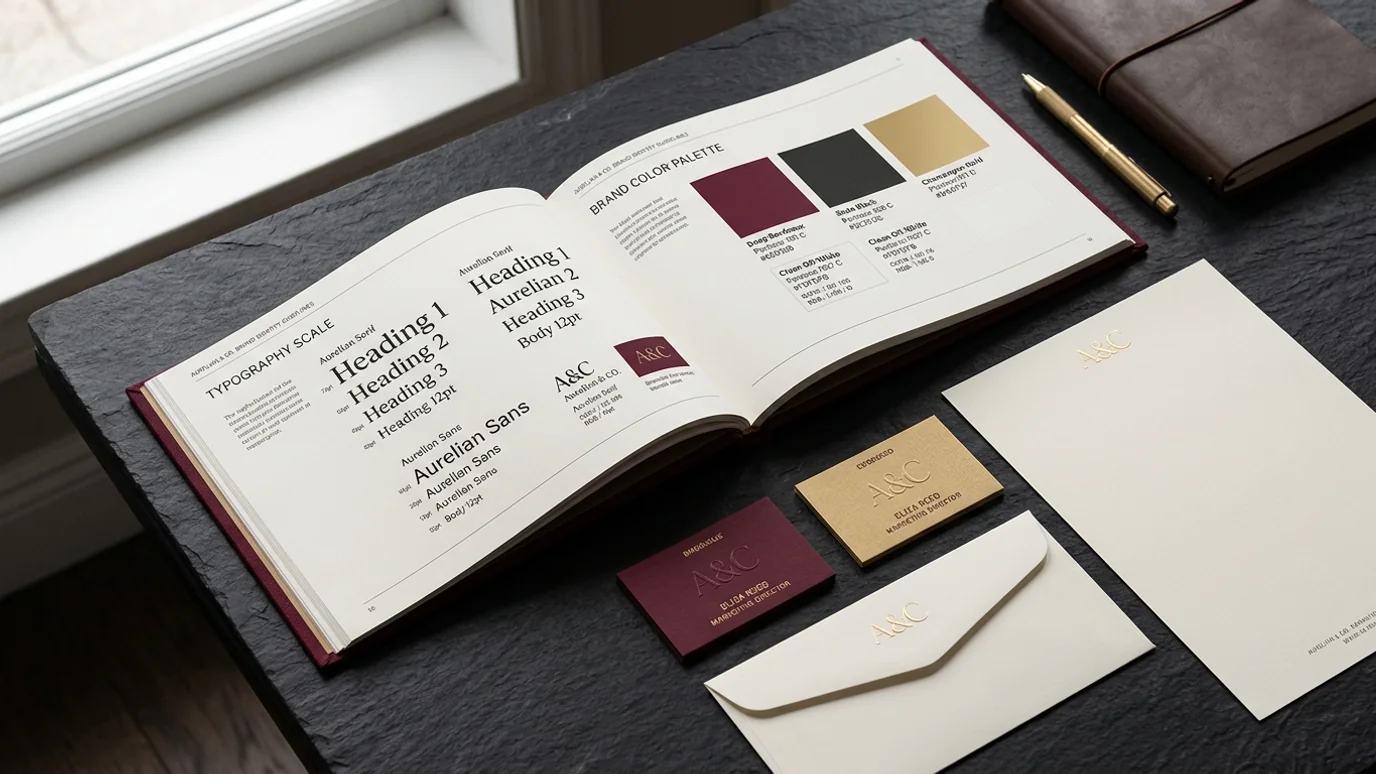
Brand guide showing positioning, tone and visual rules
Once positioning is written down, the site, the proposal and the deck all say the same thing.

When this work is not needed

Brand consultancy is not right for every company and we say so plainly. If your capacity is already full, your customer relationships are solid and growth is not a goal, this work may add nothing.

Where it genuinely helps is usually one of these: entering a new market or addressing a new customer type, repositioning after a generational handover, moving from contract production to your own product, or merging two identities into one account after an acquisition.

There is also a slower situation that accumulates: the distance widening between the story a company tells and the work it actually does now. Once that gap opens, the sales team invents its own sentences, the website says something else, and the overall impression scatters.

We assess which of these applies on the first call, and if none of them do, we say so.

Pricing and packages

from14,500TL

Brand Consulting packages start here. Scope, timeline and the final quote are set after we talk about your project.

Frequently asked questions

The questions we hear most about Brand Consulting in Ankara.

Is brand consultancy the same as logo design?

No. Logo and identity work is visual; brand consultancy is the decision stage that comes before it, covering who you address, what you promise and where you differ from competitors. An identity built before positioning is settled often has to be redone. Planning the two together is usually more efficient.

What do we actually receive at the end?

A written positioning document: audience definition, the promise, the evidence supporting it, a message hierarchy and a language guide. It becomes the shared reference for website copy, proposals, decks and sales conversations. Where naming is in scope, name proposals and the reasoning behind them are included.

We bid for public tenders. What does brand work add?

Tenders are decided on specification and price, and we are not going to pretend otherwise. The contribution of brand work sits outside the tender: winning private sector customers, being preferred in directly negotiated work, and recruiting qualified staff. We frame the expectation that way from the start.

We need a new name. How does that run?

Positioning is settled first, because the name derives from it. Then we prepare proposals across different approaches and explain what each one says, and we check domain availability. For registrability we recommend consulting a trademark attorney, since registration is a legal process outside our scope.

How long does it take?

It varies with scope and with how many people need to be interviewed. Positioning a single product takes less time than a company with several business lines. The timeline and stages are written into the proposal. What affects duration most is how quickly interviews and internal approvals move.

Looking for Brand Consulting in Ankara?

Share how you describe your company today and who you say it to. We will come back in writing on the gap we see and the scope we would suggest.